

These receptors play a large role in how we function as they are responsible for initiating the release of signal proteins. Without this critical transmission, the body fails to understand what it should be doing at any given moment. There is another series of transmitters known as neurotransmitters that are concentrated in the architecture of the brain. One key neurotransmitter, and the focus of today's discussion, is one known as gamma-aminobutyric acid or GABA for short.
GABA serves a variety of functions, but is understood to be the main inhibitory neurotransmitter in the brain. This means it acts to calm the excitable neurons, reducing their activity. Clinically, GABA is used to help support mood, relieve anxiety, treat attention deficit-hyperactivity disorder and prep the body for sleep.
Why all this talk of GABA though?
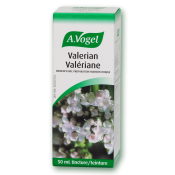
When we look to valerian, pharmacodynamic studies show that the herb inhibits the uptake of GABA, keeping it around for far longer. The plant also inhibits an enzyme that breaks down the neurotransmitter.
Now we have an herb that influences the signal that tells us to slow down, so one can imagine the benefits that might have on sleep and anxiety. Previous trials have even shown it to be as effective as low-dose oxazepam, a benzodiazepine commonly prescribed for acute anxiety. Healthy people in stressful situations also showed beneficial effects from valerian on their blood pressure and heart rate showing that it could be used to support those with mild tension or stress.
Other trials show its use for insomnia, and if you're looking for a more in-depth review, look no further than our article on "Valerian and hops for a true deep sleep".
What helps to make this formulation so potent is due, in part, to the fact that it is fresh and organic. Grown steps from the processing facility in Switzerland, where pesticides and herbicides are banned, means that when harvest season arrives, the plants do not require drying as they move from farm to facility. There are compounds in plants and herbs that are sensitive to the temperatures of a dryer, and when we lose those volatile components, we end up with a weaker product.
Now, we would be remiss to discuss the herb without acknowledging certain side effects. A subset of the population may have what is called a paradoxical reaction to the remedy. This is when the individual has the opposite reaction to the herb that they're supposed to. In this case, we understand that valerian is a sedative, helpful for putting individuals to sleep unless you fall into this subset. In this case, the herb may act as a stimulant and keep you awake, so set aside a night to experiment – though the reaction is incredibly rare. We also recommended avoiding the product if working with heavy machinery.
If you are suffering from insomnia, the most common sleep disorder globally, it might be worth trying something that you won't risk becoming dependent on. Though the benefits of valerian don't just end at sleep with some clinical trials as robust as a placebo-controlled, double-blind study showing benefits in those suffering from behavioural issues and nervous mood. Another 8-week pilot double-blind randomized trial showed the herb had anti-obsessive and anti-compulsive effects in those diagnosed with obsessive-compulsive disorder.
The total of these benefits could be, in part, due to the benefits of helping them get a full night of restorative sleep.
References
Dorn, M. "Efficacy and tolerability of Baldrian versus oxazepam in non-organic and non-psychiatric insomniacs: a randomised, double-blind, clinical, comparative study." Forschende Komplementarmedizin und klassische Naturheilkunde= Research in complementary and natural classical medicine 7.2 (2000): 79-84.
Krieglstein VJ, Grusla D. Central depressing components in Valerian: Valeportriates, valeric acid, valerone, and essential oil are inactive, however [in German]. Deutsche Apotheker Zeitung 128:2041-2046, 1988.
Morazzoni P, Bombardelli E: Valeriana officinalis: traditional use and recent evaluation of activity. Fitoterapia 66: 99-112, 1995.
Santos MS, Ferreira F, Cunha AP, Carvalho AP, Macedo T: An aqueous extract of valerian influences the transport of GABA in synaptosomes. Planta Medica 60: 278-279, 1994.
Ziegler, G., et al. "Efficacy and tolerability of valerian extract LI 156 compared with oxazepam in the treatment of non-organic insomnia--a randomized, double-blind, comparative clinical study." European journal of medical research 7.11 (2002): 480-486.