

Our bodies need sugar, but not as much as we think. The American Heart Association recommends no more than six teaspoons of added sugar per day for women and nine teaspoons for men. That's about 100 calories or 25 grams. Added sugars are sugars and syrups that are put in food during processing or preparation. Naturally occurring sugars, such as those in fruit and milk, are fine.
One reason we consume too much sugar is that it's hiding in a lot of the foods we eat. The next time you are grocery shopping, take a close look at the labels on food packages. You might be surprised to see how many common foods contain added sugars.
Another problem is that sugary drinks are easy to consume without realizing it. A can of soda, for example, contains about 40 grams of sugar. That's 10 teaspoonfuls!
Sugar isn't necessarily bad for you. But like anything else, it's important to consume it in moderation. Too much sugar can lead to weight gain and other health problems such as diabetes and heart disease.
What's really in that autumn delight?
Looking at the popular drink reveals a blend of ingredients beyond the simple pumpkin puree, milk, coffee, spices and vanilla extract of a homemade brew. One of the preservatives in the syrup form of pumpkin delight is potassium sorbate, a common chemical found in sauces and syrups to prolong shelf life. Thankfully, this compound is generally regarded as safe by multiple health authorities.
The entire drink itself is loaded with 50+ grams of sugar! For context, that is 12.5 sugar cubes! Health advocates argue that Canada's allowance for daily sugar consumption is too generous and is putting our population at risk of countless chronic diseases. Compare this to the conditional recommendations by the World Health Organization that recommended limiting sugar to, on average, about 25g for women and 36g for men.1
Besides the whooping sugar content, we need to look at other compounds like carrageenan, a gelling agent. This controversial compound has been linked to digestive upset and stomach pain in various anecdotal stories with researchers back in 2018 still exploring the link between the two.2 Scientists and patients were waiting in the wings until a 2021 study was published titled The Role of Carrageenan in Inflammatory Bowel Diseases and Allergic Reactions: Where Do We Stand?
The long-awaited conclusion, "Despite the wide CGN use as food additive, its safety is still matter of debate."3 Interestingly enough though, another more recent study found that "...high-sucrose or high-salt diet increased the risk of carrageenan-induced colitis." 4
The other downside to the well-loved PSL is that many of the most common companies do not offer vegan varieties because of the condensed skim milk found in the sauce.
With all of these concerns, what is an autumn-lover to do?
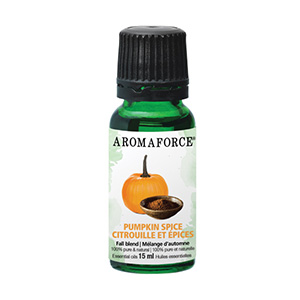
For all of the smell, but none of the sugar or calories, one might consider the new Pumpkin Spice essential oil from Aromaforce. This blend of cardamom, cinnamon, clove, nutmeg and sweet orange can be diffused for that warm and spicy scent. Unlike the PSL drink, this blend IS vegan and can even be added to a carrier oil for an autumnal massage.
Though if you do want the real thing, it might be worth turning toward gastrointestinal support - Digestive Aid Complex. The blend of herbs includes milk thistle, boldo, dandelion root and artichoke which act on enzymes to support the breakdown of fats and carbohydrates. More specifically, pancreatic lipase and α-glucosidase which is why it can be useful for breaking down those grams of saturated fat in the beloved drink.5
In summary...
Pumpkin spice lattes are loaded with sugar and can quickly overload your system, leading to weight gain and other health problems. So if you're looking for a tasty autumn treat, try something a little healthier-like a warm bowl of oatmeal with pumpkin pie spice while you diffuse Pumpkin Spice by Aromaforce.
References
- World Health Organization. Global action plan for the prevention and control of noncommunicable diseases 2013-2020. World Health Organization, 2013.
- David, Shlomit, et al. "Revisiting the carrageenan controversy: do we really understand the digestive fate and safety of carrageenan in our foods?." Food & function 9.3 (2018): 1344-1352.
- Borsani, Barbara, et al. "The Role of Carrageenan in Inflammatory Bowel Diseases and Allergic Reactions: Where Do We Stand?." Nutrients 13.10 (2021): 3402.
- Gao, Yuan, et al. "The risk of carrageenan-induced colitis is exacerbated under high-sucrose/high-salt diet." International Journal of Biological Macromolecules 210 (2022): 475-482.
- Villiger, Angela, et al. "In vitro inhibitory potential of Cynara scolymus, Silybum marianum, Taraxacum officinale, and Peumusboldus on key enzymes relevant to metabolic syndrome." Phytomedicine 22.1 (2015): 138-144.