

Why does a heart attack occur?
A heart attack, medically known as a myocardial infarction, occurs because an artery that feeds the heart has become blocked. This means that blood carrying the oxygen necessary for the heart cells to function, fails to reach cells. They begin to die and this impacts the overall effectiveness of the heart.
What does a heart attack look like?
When the proper function of the heart is interrupted, this causes a host of issues. You may suddenly experience fatigue due to the inability of the heart to pump the blood to the tissues. Without the necessary supply to the brain, individuals may begin to experience a sense of dizziness or lightheadedness. There may also be a sudden shortness of breath and the sensation of something heavy sitting on your chest. You may break into a cold sweat and feel pain radiating along your arm or jaw.
What symptoms vary between men and women?
The primary difference is that women are more likely to experience milder versions of the listed symptoms. Men are more likely to experience pain radiating through the shoulders and arms, as well as cold sweats or nausea while women are more likely to experience back or jaw pain, fainting, and extreme fatigue.
Triggers are also important to touch upon. Most often, women report an emotional stress prior to their heart attack while men report activity and physical exertion.
Do female hormones have an impact?
Yes! Estrogen is a potent hormone released in larger amounts to prepare the uterus for pregnancy following ovulation. It has a variety of effects such as encouraging blood clot formation, dilation of the blood vessels to encourage blood flow, an increase in healthy cholesterol, a decrease in unhealthy cholesterol, and even encourages the removal of free radicals. It therefore makes sense that as females age and their supply of eggs dwindles, less and less estrogen is produced. The hypercoagulable state as a result of estrogen has been shown to be a large risk factor for the formation of thromboembolisms, blood clots that may dislodge and become blockages in other vessels of the body such as the coronary arteries with long term estrogen use. However, in the short term use with regular check ins with your primary care provider, this hormone can actually serve a protective function in the female body.
Are there any early warning signs or risk factors I should be aware of?
The Canadian Government also reports that, “Nine in 10 Canadians over the age of 20 have at least on risk factor for heart disease. Four in 10 have three or more risk factors”. Some of these risk factors are beyond control such as the inevitable passage of time and genetics. Those with heart disease in their immediate family are at a higher risk of experiencing a cardiac event themselves.
With that said, the focus should be on the risk factors within one’s control. These include:
- Sedentary lifestyle – inactivity allows plaque to build up around the vessels of the body. Imagine that a dam breaks and the rapid flow of water through the land downstream – with the speed of the water, it’s less likely debris is going to catch. However, if that water moves slowly, the debris has a higher chance of settling together.
- Obesity – a higher amount of fatty tissue means a higher risk of that tissue entering the blood stream and contributing to a blockage.
- Diet – fast food every day is unfortunately not a means of achieving your optimal cardiovascular health. These foods are often high in saturated and trans fats which contribute to elevated cholesterol levels. The amount of sodium in these foods also contributes to obesity and elevated blood pressure.
- Other factors include: smoking, diabetes, stress, and high blood pressure.
What can I do to prevent this from happening to me or a loved one?
While it may seem like a mantra from your primary care provider, you should consider improving your diet, putting down the cigarettes, and finding healthy coping strategies for your stress.
Certain herbs and plants have the ability to improve or support the function of the heart. One such member is the berries of the Hawthorn plant (Crataegus oxycantha) which has classically been used as a cardiotonic. The extract can increase the force of contraction of the heart, therefore forcing a greater volume of blood through the body at a faster rate. This could potentially move any buildup of plaque in the vessels through by sheer force. The berries are also anti-arrhythmic and have the ability to suppress abnormal heart rhythms.
A major complication of a myocardial infarction is something known as an ischemia-reperfusion injury. When the cells and vessels of the heart fail to receive the oxygen they need, before suddenly becoming full of blood again after removal of the blockage, can lead to damage. These cells begin to produce more reactive oxygen species, which damage cells and induce an inflammatory response. Hawthorn has also been shown to protect against these types of injuries.
Where can I find this magical berry?
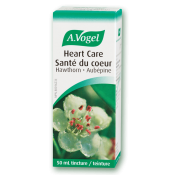
Products like Heart Care are a tincture that contains fresh Hawthorn berry but should not be used in the long term unless directed by your primary care provider.
Can you suggest any foods I should add to my diet?
Reducing your intake of pre-made foods is a key way to achieve a healthier diet. This gives you the ability to control what is being put into your food and how much. In addition, one should try and add omega-3 to their daily diet for its cardio protective effects. Additionally, these compounds have the ability to decrease fats in the system, lower blood pressure, and thereby reduce your risk of a cardiovascular event. While many omega-3’s are derived from marine animals, products such as VegOmega-3 offer a plant based source derived from flaxseed and algae, perfect for the conscious vegetarian.
References
https://www.canada.ca/en/public-health/services/diseases/heart-disease-heart-health.html
https://my.clevelandclinic.org/health/articles/16979-estrogen--hormones
https://www.ncbi.nlm.nih.gov/pmc/articles/PMC2577845/
https://www.ncbi.nlm.nih.gov/pmc/articles/PMC2889194/
https://www.ncbi.nlm.nih.gov/pubmed/9704678
https://www.ncbi.nlm.nih.gov/pubmed/16487691
https://www.ncbi.nlm.nih.gov/pubmed/18316000
https://www.ncbi.nlm.nih.gov/pubmed/20163835
https://www.ncbi.nlm.nih.gov/pubmed/25052403